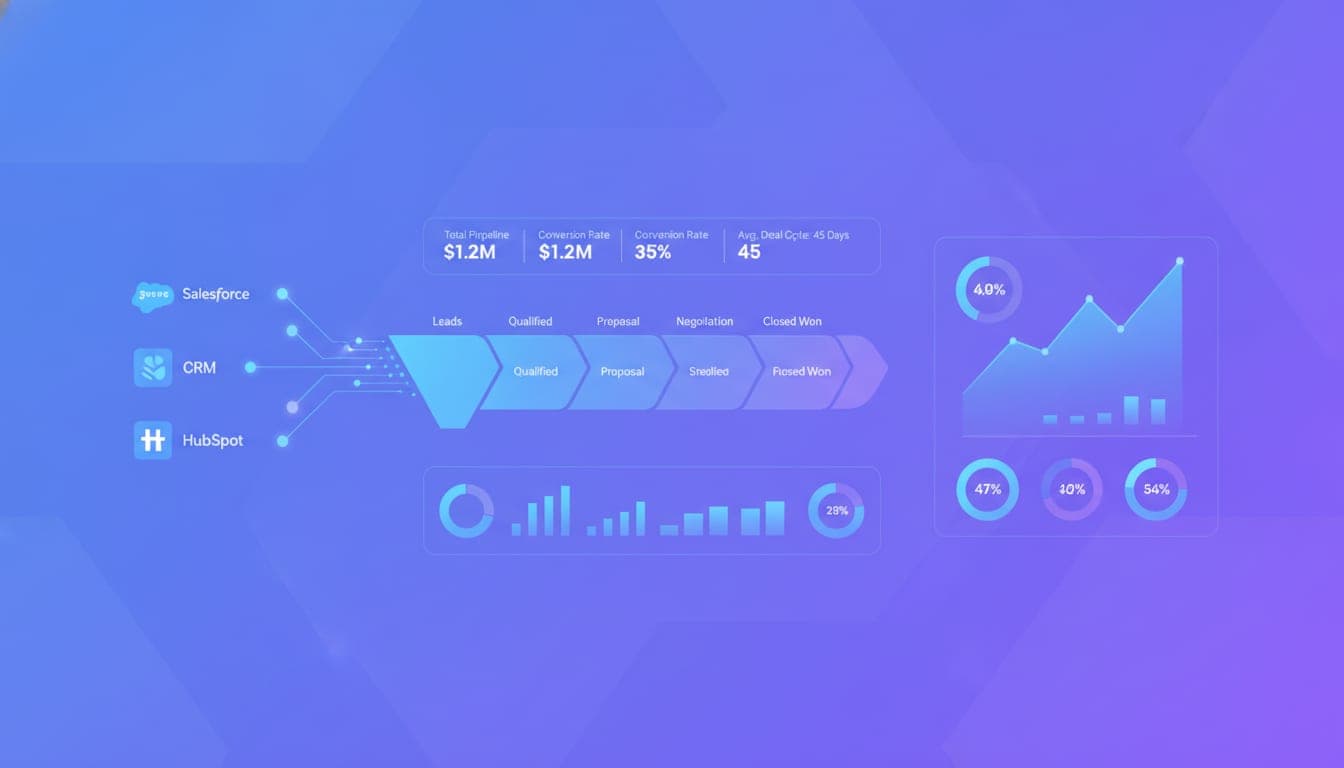
Most sales and RevOps teams face the challenge of prioritizing leads effectively, yet many believe they need a dedicated data team to do so. The truth is, with the right approach and tools, you can build an automated lead scoring system that works without hiring a data scientist. This guide walks through how to do it, focusing on ICP-based scoring, AI automation, and practical workflows.
How Do I Score Leads Automatically?
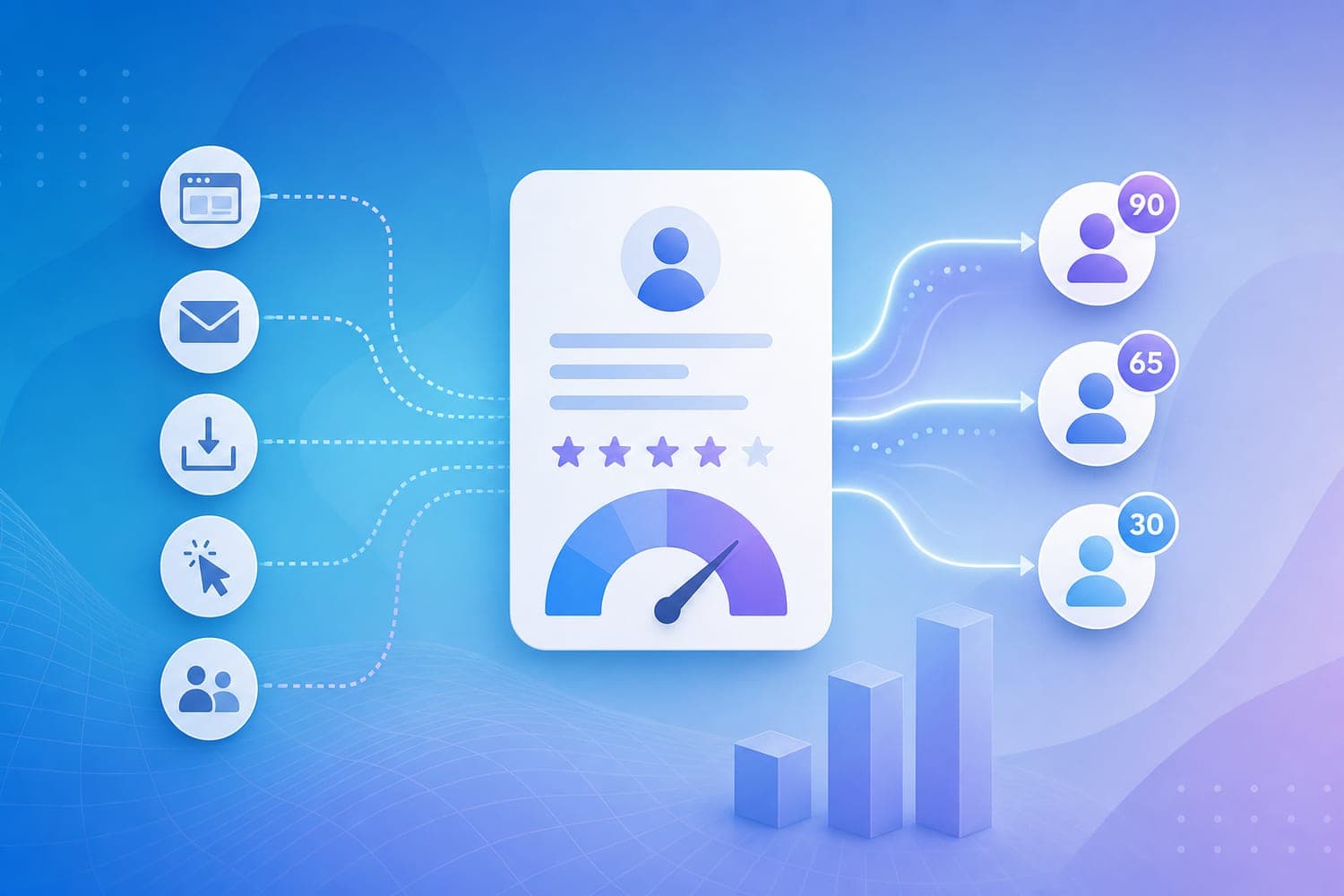
You can score leads automatically by combining rule-based automation within your CRM or marketing platform with AI-powered predictive models. Most teams start with explicit criteria—like job title, company size, or engagement signals—and then layer in AI to discover non-obvious patterns.
Rule-based scoring involves setting explicit 'if/then' rules. For example, '+10 points if they visit the pricing page' or '-20 if they use a Gmail address. These are straightforward to implement in tools like HubSpot or Marketo.
Predictive models, on the other hand, analyze historical conversion data to identify behaviors and traits that correlate with closed deals. Modern AI features in CRMs like Salesforce Einstein or HubSpot's predictive scoring can automatically update lead scores based on new data, without requiring a data team.
Tools like Mark can automate this entire workflow from a single conversation, making it accessible even for small teams.
What Is ICP-Based Lead Scoring?
ICP-based lead scoring evaluates how closely a lead's company matches your 'Ideal Customer Profile' (ICP) rather than just their individual actions. It focuses on firmographic and technographic data—such as industry, revenue, employee count, and current tech stack—to determine if an account is a high-value target.
This approach is especially useful in Account-Based Marketing (ABM) strategies, where the goal is to prioritize entire accounts. Instead of just scoring individual leads, you score accounts based on their fit and engagement. For example, a company in your target industry, with the right size, and showing buying intent, would score highly.
Enrichment tools like Clearbit or ZoomInfo can automatically pull this data, allowing RevOps teams to implement ICP-based scoring without a data team. This method often results in 2-3x higher conversion rates and lower churn.
Do I Need a Data Team for Lead Scoring?
Most teams, especially in SMB and mid-market segments, do not need a dedicated data team to implement effective lead scoring. Modern CRM and marketing automation platforms have democratized predictive scoring, making it accessible to non-technical users.
With no-code tools and AI wrappers like OpenAI + Make.com, marketers and RevOps professionals can build and maintain scoring models. The key is to focus on data hygiene—ensuring fields are clean and consistent—and to use built-in AI features for model training.
A data team is only necessary for highly complex, multi-product attribution or enterprise-level data infrastructure. For most B2B SaaS and service companies, a well-configured rule-based or ICP-focused scoring system suffices.
Managing Signal Decay and Signal Rot
One common pitfall is ignoring how signals decay over time. An inbound form fill from six months ago shouldn't carry the same weight as a recent demo request. Automated scoring systems should incorporate 'signal decay'—reducing scores for inactive leads—to keep the pipeline fresh.
Similarly, channels like LinkedIn ads can degrade in quality if not recalibrated. Regularly reviewing and recalibrating your scoring model ensures it remains aligned with current buyer behavior.
Tools like Mark can help manage this by automatically recalibrating scores based on recent data, avoiding the trap of signal rot.
Practical Steps to Build Your Automated Lead Scoring System
- Define Your ICP: Clearly articulate your ideal customer profile, including firmographics and technographics.
- Identify Key Engagement Signals: Website visits, content downloads, email opens, demo requests.
- Set Up Enrichment: Use free or affordable APIs (like Clearbit Free Tier) to fill in firmographic data.
- Implement Rules for Basic Scoring: Use your CRM to assign points based on explicit criteria.
- Layer in AI for Pattern Recognition: Use simple predictive tools or AI wrappers to analyze historical data.
- Incorporate Signal Decay: Reduce scores for leads inactive over a certain period.
- Automate Data Refresh and Recalibration: Use workflows to keep data current and scores relevant.
- Align Sales and Marketing Feedback: Regularly review scoring accuracy and adjust criteria.
Instead of stitching together six tools, try Mark — it builds and runs the whole pipeline, from enrichment to scoring, in a conversational manner.
Final Thoughts
Most RevOps teams can implement effective, ICP-based lead scoring without a data team. The key is to focus on clear criteria, leverage AI and automation, and continuously recalibrate signals. As the landscape shifts—channels decay, signals rot—your scoring system should adapt automatically.
If you're still doing this manually or relying solely on static rules, you're leaving value on the table. Modern tools make it possible to prioritize leads at scale, with minimal technical overhead. Try Mark to see how automation can simplify your lead qualification process.