Personalizing cold emails at scale remains one of the most challenging yet rewarding aspects of outbound sales in 2026. Most teams struggle with balancing relevance and volume, often resorting to generic templates that yield dismal reply rates. But what actually works today? How do you craft personalized outreach that cuts through the noise without drowning in manual research?
In this article, I’ll break down the current state of cold email personalization at scale, answer common questions, and share proven strategies to boost response rates in 2026. Whether you’re in SaaS, MedTech, manufacturing, or services, these insights will help you refine your approach and get better results.
How do I personalize cold emails at scale?
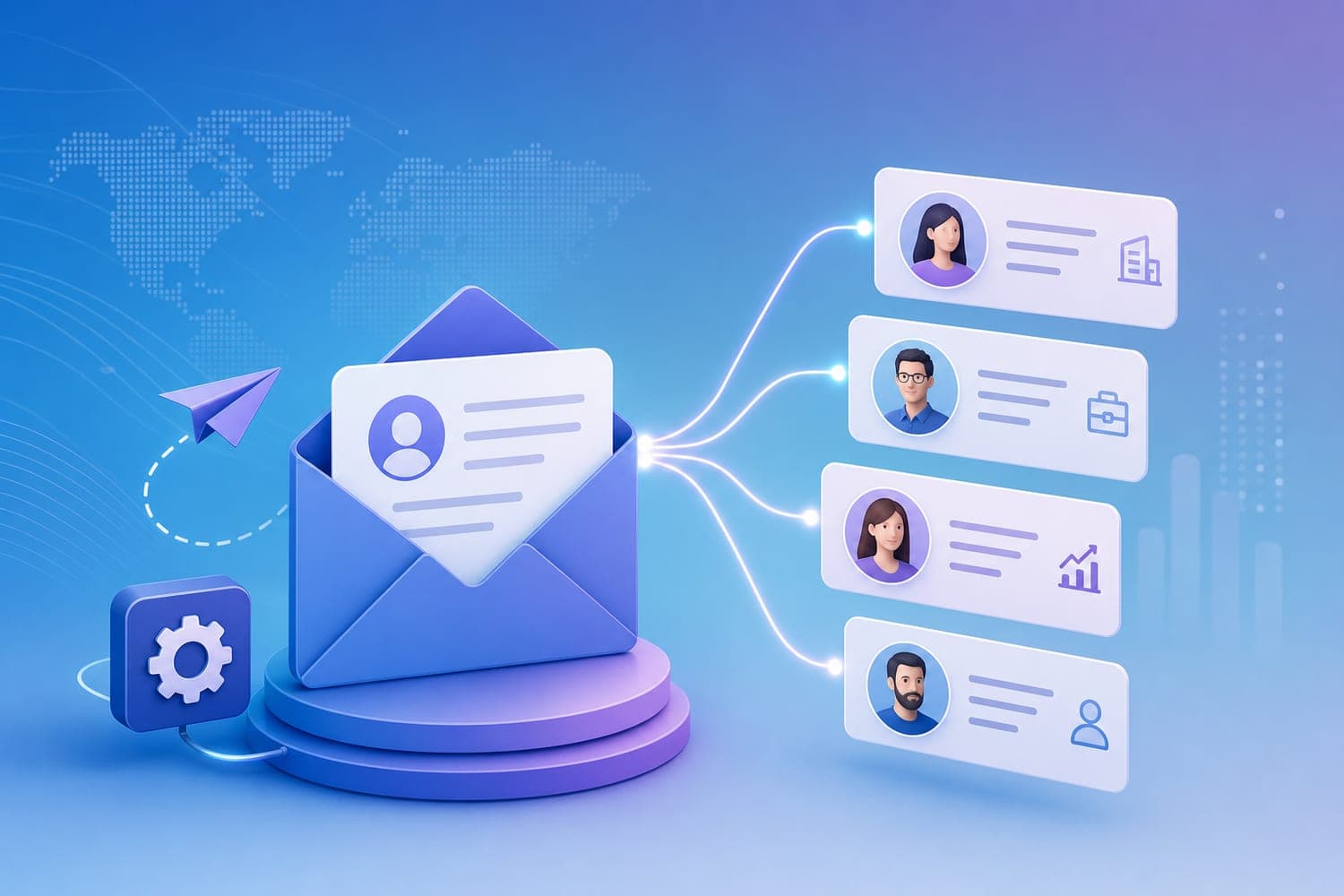
Personalizing cold emails at scale requires a shift from manual research to automated, signal-based personalization. The key is combining granular audience segmentation with AI-driven data enrichment and dynamic template variables.
The three-layer framework
Most successful teams use a three-layer approach:
- Firmographic relevance: Understand the company’s recent activities, funding, or product launches.
- Persona-based pain points: Tailor messages to specific roles, referencing their known challenges.
- Timing and behavioral triggers: Use signals like recent job changes, hiring surges, or content engagement.
Tools and techniques
Tools like Mark can automate this entire workflow from a single conversation. They analyze 50+ data points per prospect in seconds, pulling in signals from LinkedIn, news, and public data. Dynamic logic, such as Liquid Syntax, allows you to insert this data into your templates seamlessly.
Practical example
Instead of a generic "I saw your post," a hyper-personalized opener might be: "I noticed your recent LinkedIn post about scaling SaaS teams, which aligns with a challenge we recently solved for a similar client." This level of detail requires AI research tools but can be automated at scale.
Does personalized email outreach work?
Yes, personalized email outreach significantly outperforms generic campaigns. Data shows that advanced personalization can double or even triple reply rates.
The numbers
- Personalized subject lines increase open rates by 37% (Experian).
- Reply rates for highly personalized emails hover around 15-30%, compared to less than 3% for generic templates.
- 58% of replies come from the first touch, but follow-ups still generate 42%. Most teams neglect follow-up, missing out on a large share of responses.
Why it works
Personalization builds trust and shows the prospect you’ve invested effort. It reduces spam complaints and increases positive engagement. In 2026, prospects expect tailored outreach; generic messages are seen as spam or laziness.
The role of AI
AI tools analyze thousands of signals quickly, enabling you to craft relevant messages without manual research. Instead of stitching together six tools, try Mark — it builds and runs the whole pipeline, from signal gathering to personalized messaging.
What is hyper-personalized cold email?
Hyper-personalized cold email is the highest level of outreach, where each message references a specific, verifiable artifact about the prospect. It’s not just about company or role; it’s about a unique, recent activity or statement.
Examples of hyper-personalization
- Referencing a recent podcast interview or webinar they hosted.
- Mentioning a specific sentence from their LinkedIn post.
- Citing a recent funding round or product launch.
Why hyper-personalization matters
It shows genuine effort and understanding, creating a psychological reciprocity. This approach is most effective for high-value prospects where the ROI justifies the extra research or AI processing cost.
How to do it efficiently
Use AI agents that analyze public activity and extract meaningful artifacts. These tools can find and verify details in seconds, allowing you to send highly tailored messages at scale.
Additional insights for 2026
Deliverability infrastructure remains critical. Proper SPF, DKIM, and DMARC setup is mandatory, as email authentication is non-negotiable. Automated warm-up services and inbox rotation help maintain sender reputation.
Signal-based engineering—using live triggers like hiring surges or funding rounds—makes outreach more timely and relevant. Combining this with multi-channel orchestration (email + LinkedIn + phone) can boost results by over 280%.
Most teams now use intent signals to trigger outreach, shifting from cold to warm prospects. This trend makes personalization more effective and less spammy.
Final thoughts
Cold email personalization at scale in 2026 is about smart automation, signal-driven relevance, and deep artifact research. The days of generic templates are over. Instead, focus on building a system that gathers signals, verifies artifacts, and personalizes dynamically.
Tools like Mark can handle this entire process, freeing your team to focus on strategy and high-value engagement. If you’re still doing this manually, you’re leaving response rates and ROI on the table.
In a landscape where reply rates average just 3.43%, the difference between generic and hyper-personalized outreach can be the difference between a pipeline and a pipe dream.
This article is part of our ongoing series on modern outbound strategies. Stay tuned for more insights on how AI is transforming GTM in 2026.