
Most founders and GTM leaders struggle with choosing the right AI marketing tools. The market is flooded with options promising automation, insights, and efficiency, but most of these tools fall short of delivering measurable ROI. When you're non-technical, evaluating these platforms can feel like navigating a maze of jargon, features, and vendor hype.
In this guide, I'll walk you through a practical framework to evaluate AI marketing tools effectively—focusing on outcomes, integration, and vendor credibility. This isn't about checklist ticking; it's about making strategic decisions that align with your core bottlenecks and growth goals.
Understanding What You Need from AI Marketing Tools
Before diving into vendor comparisons, clarify your primary marketing bottleneck. Are you trying to generate more leads, improve conversion rates, optimize ad spend, or personalize customer experiences? Most teams jump into demos without this clarity, leading to choices based on shiny features rather than real needs.
For example, if your challenge is reducing cost-per-lead, look for tools that can automate outreach and qualify leads with high accuracy. If your goal is content creation, focus on generative AI that can produce high-quality, brand-aligned copy.
Tools like Mark can automate this entire workflow from a single conversation, helping you align your AI investments with specific outcomes.
How Do I Evaluate AI Marketing Tools?
1. Map the Tool to Your Funnel Bottlenecks
Most teams make the mistake of evaluating features in isolation. Instead, map each tool to your specific funnel challenge. Does it target your most pressing constraint? For instance, if your bottleneck is inbound lead routing, does the platform offer real-time enrichment and scoring?
According to this recent AI marketing checklist, defining the specific problem the tool needs to solve is critical.
2. Verify Accuracy and Reproducibility
Most enterprise AI pilots fail because of data quality and inconsistent results. Ask vendors for proof of their platform's accuracy—can they produce consistent outputs? How do they handle bias? As this analysis shows, transparency in how the AI makes decisions is vital.
3. Assess Ease of Integration
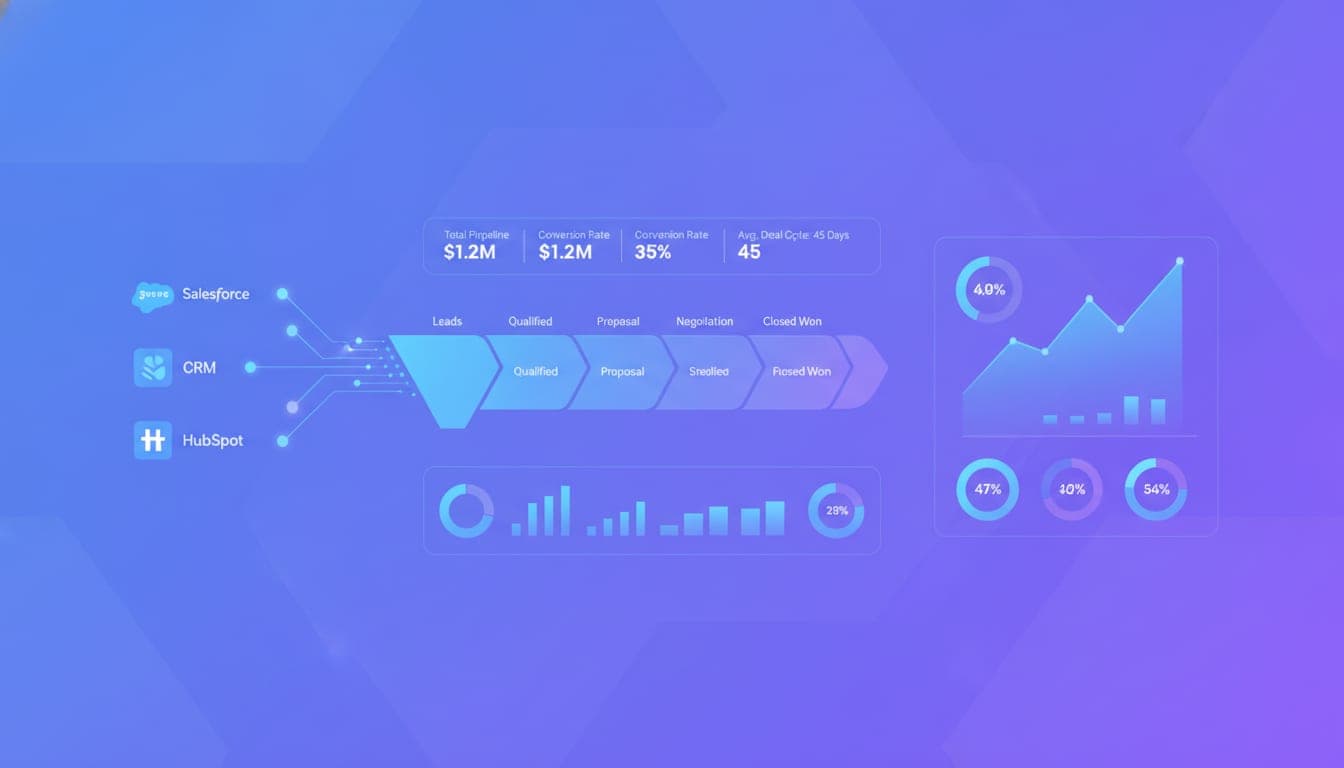
Most non-technical teams underestimate the importance of native integrations. Does the platform connect seamlessly with your CRM, CMS, or ad platforms? Manual data transfers or API customizations add hidden costs and slow down deployment.
4. Evaluate Vendor Credibility and Support
Most vendors claim to be the best. Instead, ask for real-world proof—live output samples, case studies, or pilot results using your data. Also, inquire about ongoing support, model updates, and exit strategies. As this audit checklist emphasizes, understanding the vendor's methodology and retraining practices is crucial.
Comparing Vendors: Beyond Checklists
Most teams compare vendors based on feature checklists, which is a mistake. Instead, classify vendors into categories—such as insights, decisioning, or generative AI—and request live proof-of-concept tests. Ask how their models are trained, how often they retrain, and what data sources they use.
For example, a platform that claims to generate ad copy should be tested with your brand assets and guidelines. This real-world validation reveals friction points that a demo cannot.
The Hidden Costs and Risks
Most organizations overlook the 'integration tax'—the ongoing costs of maintaining APIs, troubleshooting, and data synchronization—which can account for 25-40% of total AI tool spend (Digital Applied).
Additionally, most AI initiatives fail because of poor data quality. Ensuring your internal data is clean, structured, and AI-ready is a prerequisite for success.
Final Thoughts
Most teams are flying blind when evaluating AI marketing tools. The key is to focus on outcomes, verify accuracy, ensure seamless integration, and understand vendor practices. Avoid getting dazzled by features; instead, demand real proof that the platform can deliver on your specific goals.
If you're still doing this manually or stitching together multiple tools, try Mark—it builds and runs the entire pipeline from a single conversation.
Remember, most enterprise AI pilots fail because of data gaps and poor integration. Building a strategic, outcome-focused evaluation process is your best defense.