Most founders and solo marketers ask: How do I do marketing alone? The answer lies in building a highly systemized, AI-powered marketing machine that automates routine tasks, consolidates tools, and focuses your energy on strategic positioning.
In 2026, the landscape has shifted dramatically. Autonomous marketing agents are no longer a futuristic concept—they are here, actively managing campaigns, monitoring brand mentions, and even optimizing content in real time. According to The 2026 AI Marketing Stack: Moving to Zero-Latency, AI has moved from passive assistants to proactive systems that identify traffic drops, formulate plans, and execute updates without human intervention.
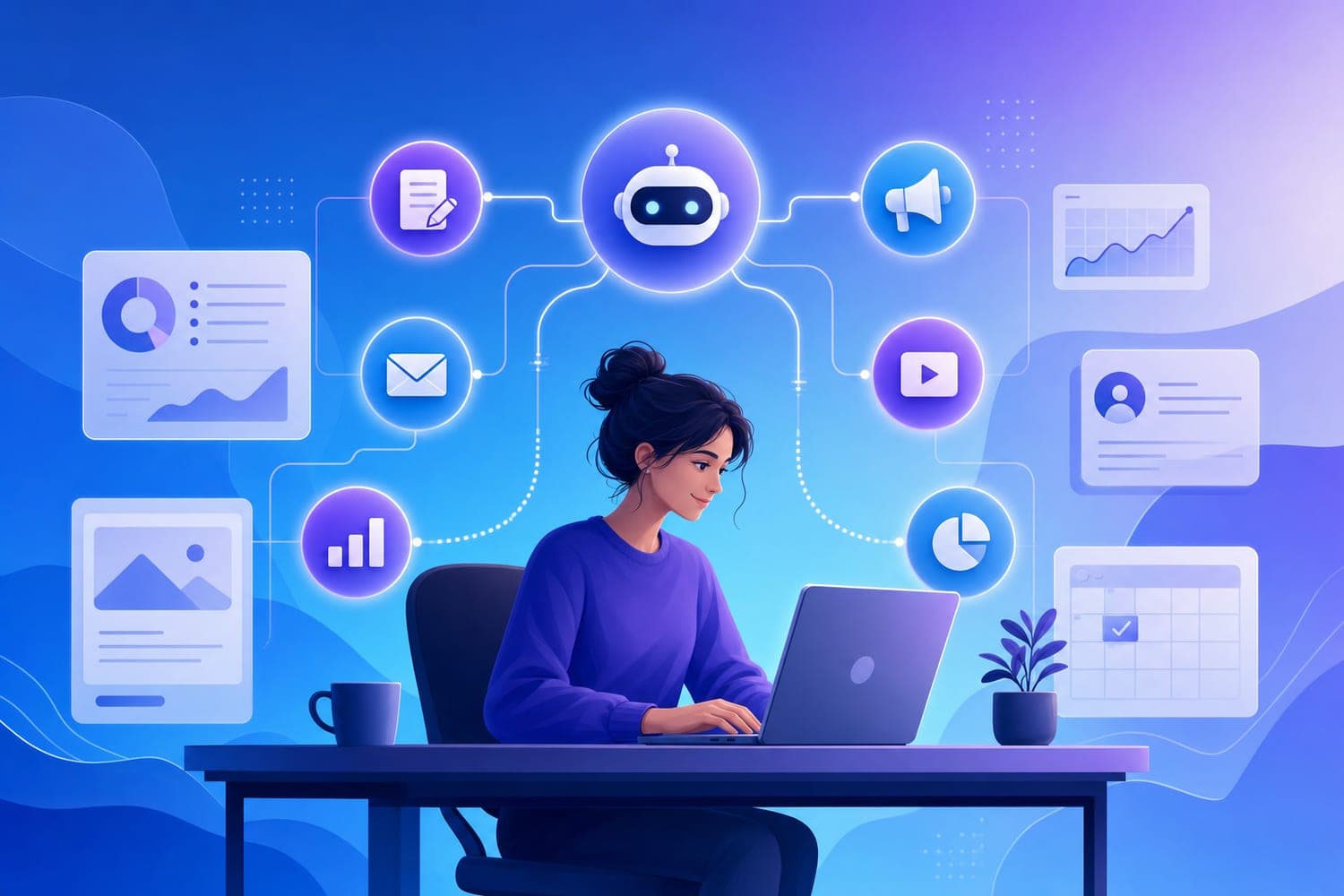
So, can one person run all of marketing with AI? The short answer is yes, but with caveats. It requires a shift from manual, siloed tasks to a unified, integrated AI stack that acts as your "marketing second brain." This stack automates content creation, outreach, analytics, and even customer engagement, freeing you to focus on strategic decisions and brand positioning.
How to Do Marketing Alone?
Doing marketing solo demands a disciplined, systemized approach. Instead of juggling multiple platforms and tools, you should prioritize a few high-impact channels—most notably owned channels like email lists and your website—where you control the audience. Batch-creating content in dedicated blocks minimizes context switching and boosts productivity.
For example, dedicate one week to produce a batch of blog posts, social media updates, and email newsletters. Use AI tools like Mark to generate drafts, design visuals, and even schedule distribution. This approach ensures consistency and reduces the weekly time spent on repetitive tasks.
What Does a Solo Marketer Need?
Most teams waste thousands on disjointed SaaS tools that are rarely fully utilized. As this analysis shows, most small businesses operate with over 14,000 solutions, but only utilize about 33%. Instead, a lean, integrated stack—comprising a CRM, content automation, analytics, and outreach tools—can do more with less.
A typical solo marketer's stack might include an AI-enabled CRM like Attio, outreach automation with Clay, content generation via GPT-based tools, and analytics platforms. These tools should communicate seamlessly, ideally through APIs or automation platforms like Make, to create a continuous flow of data and actions.
Can One Person Run All of Marketing with AI?
Absolutely. AI acts as a force multiplier. Repetitive tasks—such as drafting cold emails, creating social posts, or monitoring brand mentions—can be fully automated. For instance, Cursor allows non-technical marketers to instantly generate landing pages and run A/B tests without coding.
A real-world example: a non-technical employee at Anthropic managed their entire growth marketing—ads, content, analytics—using AI automation for 10 months. They automated 70-80% of routine tasks, freeing up significant time for strategic work. The human role shifts to overseeing brand voice, ensuring factual accuracy, and making high-level decisions.
Building Your Solo Marketer AI Stack
Start with core functions: content creation, outreach, analytics, and brand monitoring. Use tools that are highly integrated and AI-native. For example, combine ChatGPT for content, Clay for outreach, and Unify for data pipelines. This minimizes tool bloat and maximizes efficiency.
Avoid subscription fatigue by consolidating into a 5-tool stack, as this guide emphasizes.
The Future of Solo Marketing
The trend is clear: autonomous, AI-driven marketing systems will become the norm. They will proactively monitor, optimize, and execute campaigns, leaving you to focus on strategic positioning and customer empathy. Tools like Mark can automate this entire workflow from a single conversation.
Most founders who embrace this approach report saving 15 hours weekly—equivalent to nearly two full workdays—while producing content four times faster and achieving higher engagement. Operating costs for a solo AI-powered stack can be as low as $3,000 annually, a fraction of traditional marketing teams.
Final Thoughts
Building a one-person marketing machine is no longer a pipe dream. It requires disciplined system design, strategic prioritization, and the right AI tools. Instead of trying to do everything manually or managing a sprawling tech stack, focus on integration and automation. Your solo marketing operation can be as effective as a full team—if not more so.
If you're still doing this manually, try Mark — it handles your entire marketing pipeline end to end.