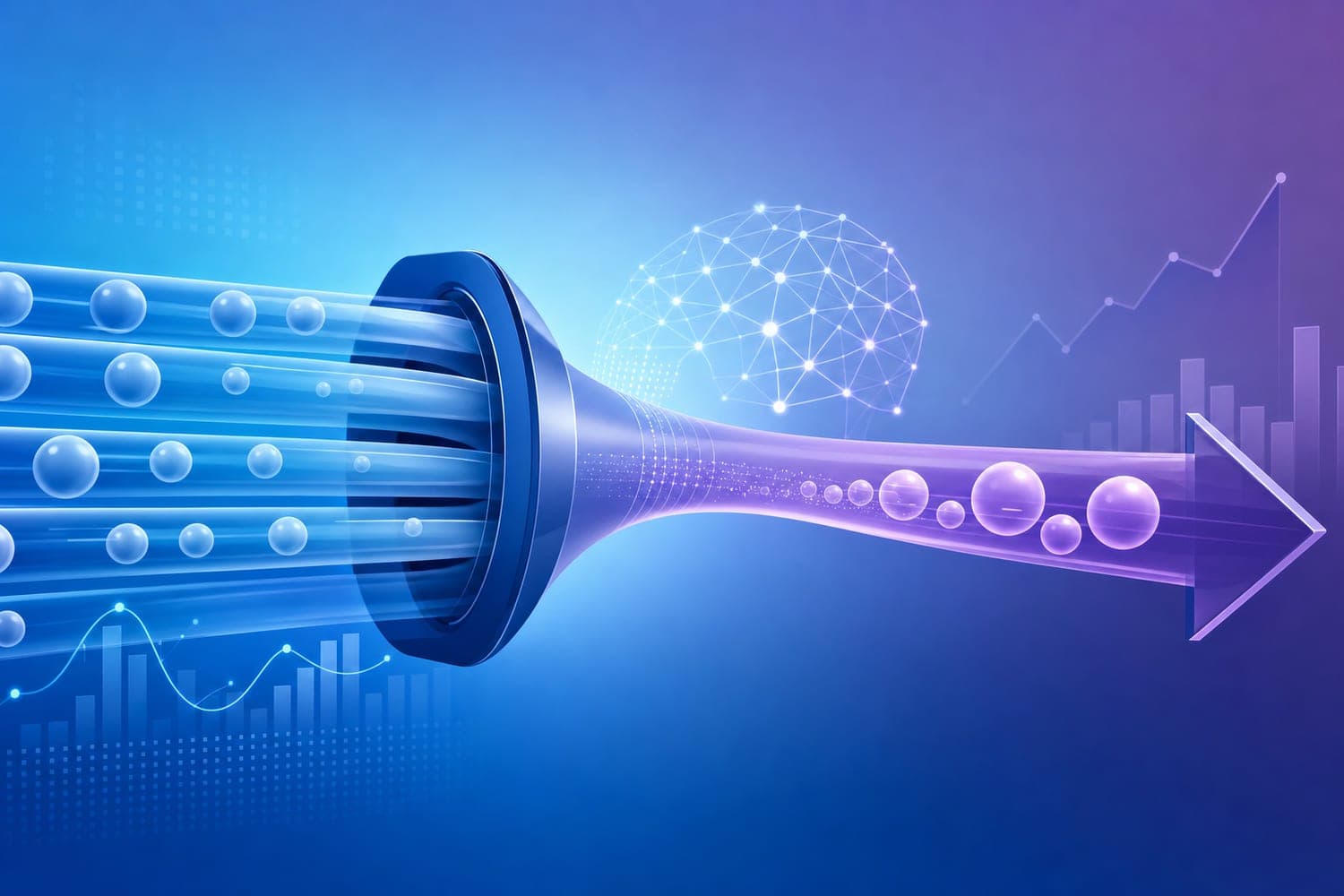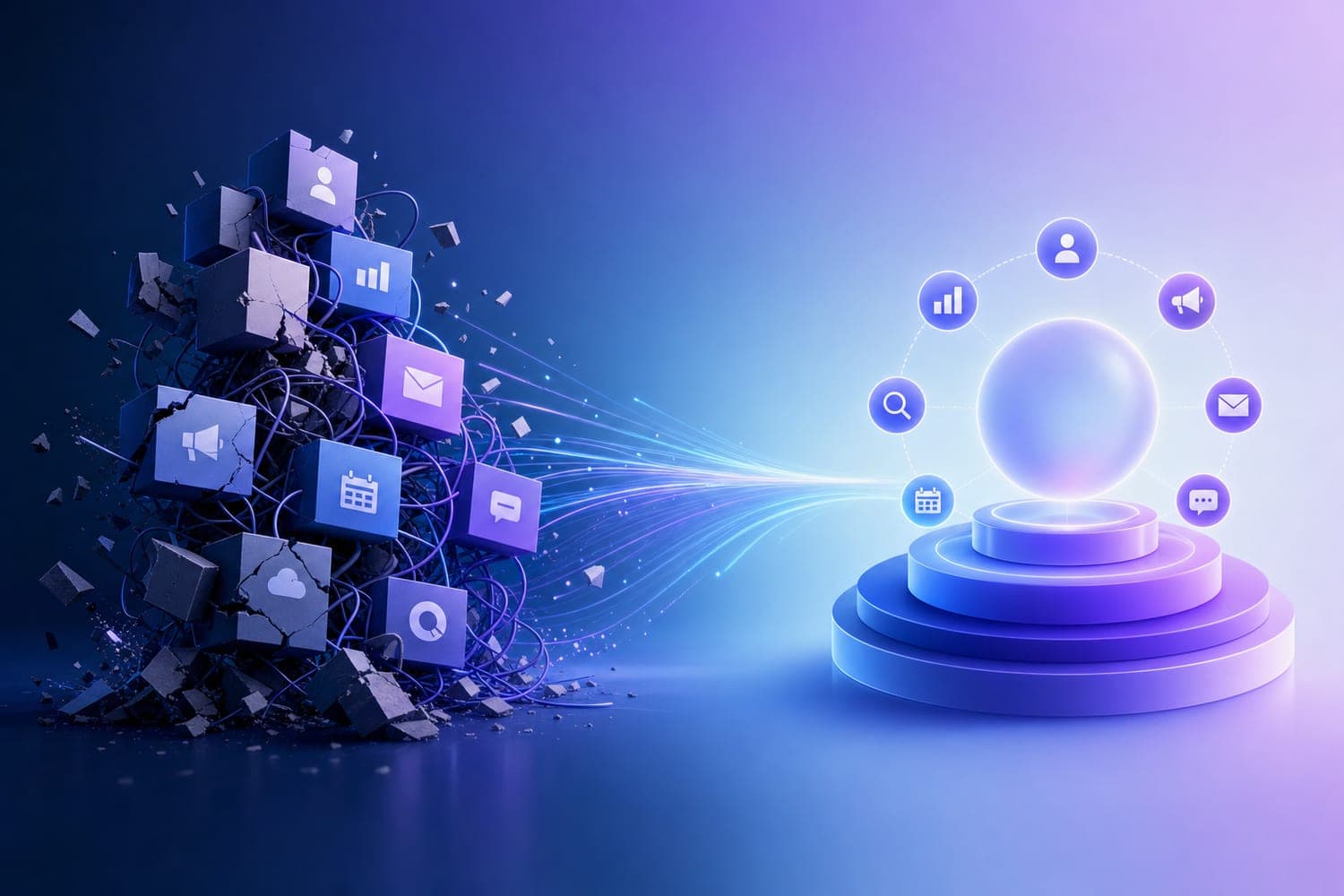
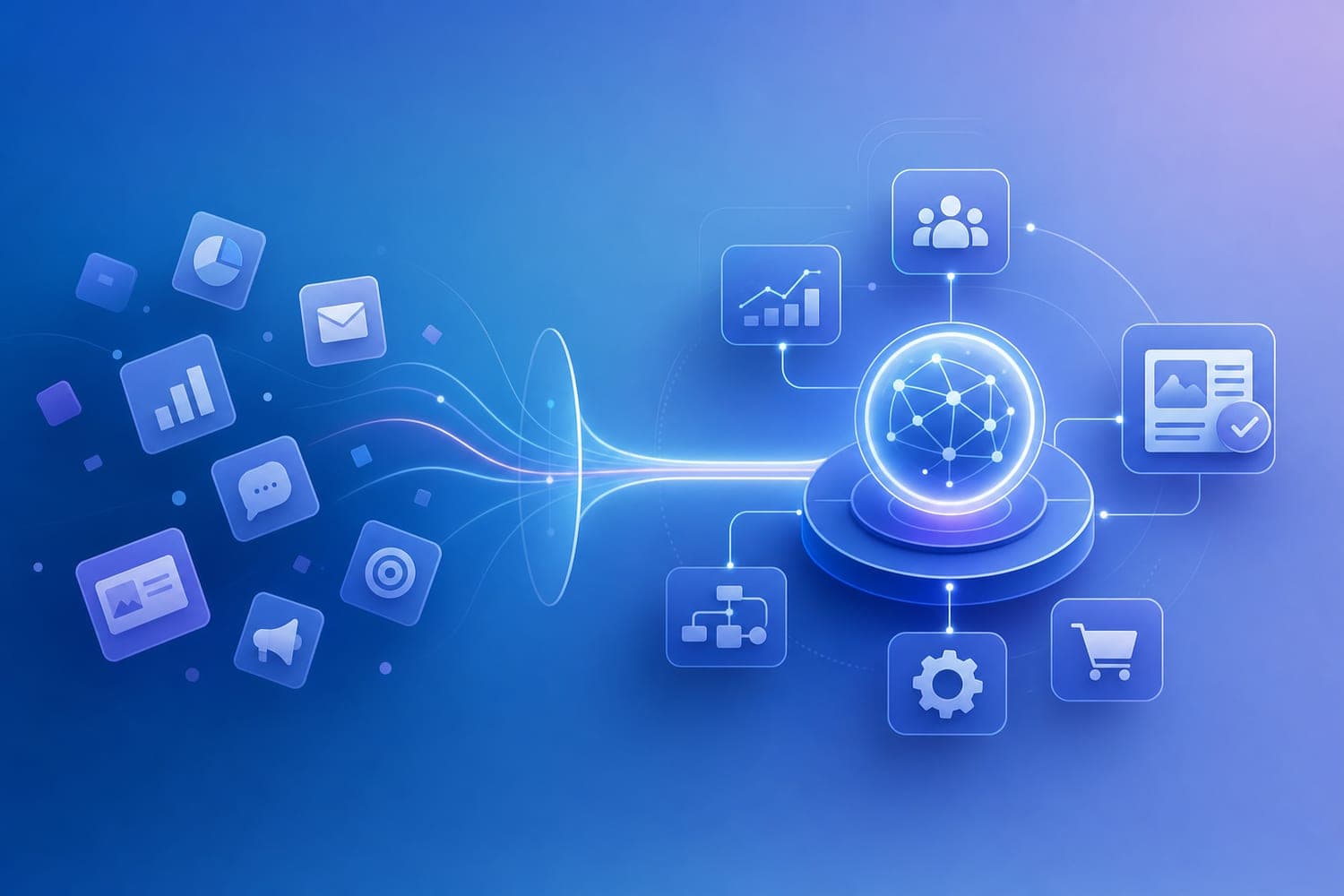
Most GTM leaders today are familiar with marketing automation tools—email drip campaigns, CRM workflows, ad management platforms. But a seismic shift is underway. The future of marketing isn't about using isolated tools; it's about deploying autonomous marketing systems that reason, adapt, and act independently. This transition from tools to systems is redefining what it means to execute and optimize go-to-market strategies.
What is Autonomous Marketing?
Autonomous marketing is a strategy where AI agents independently plan, execute, and optimize marketing campaigns based on high-level goals rather than pre-defined rules. Unlike traditional automation, which relies on static workflows triggered by specific conditions, autonomous marketing employs reasoning, predictive analytics, and real-time data to adapt dynamically.
Think of it as a self-driving car for your brand: you set the destination (your business goal), and the AI system determines the best route, making millisecond adjustments to ad spend, content personalization, and channel selection without human intervention. This approach enables what I call "agentic personalization," where the system anticipates customer needs and follows up automatically across the entire buyer journey.
If you're still stitching together multiple tools to handle different parts of your marketing, consider this: tools are task-specific. Systems are outcome-specific. The difference is profound.
Can Marketing Run Itself with AI?
Most founders and marketers ask: can AI truly run marketing end to end? The answer is nuanced. While AI can handle the majority of tactical execution and optimization, complete autonomy without human oversight isn't yet feasible or advisable.
Most experts agree that AI excels at micro-optimizations—adjusting bids, personalizing content, routing leads—at scale. For example, Gartner predicts that by 2029, 80% of customer service tasks will be handled by AI without human intervention. But high-level strategy, brand voice, and ethical considerations still require human judgment.
Instead of thinking in terms of full automation, most successful brands adopt a hybrid approach: humans set strategic intent, define guardrails, and oversee the AI systems that execute and optimize campaigns. If you haven't yet explored tools like Mark, they can automate this entire workflow from a single conversation.
What is a Marketing System vs a Marketing Team?
Most teams confuse the two. A marketing team is a group of humans—creative, strategic, and operational—who manage campaigns, craft messaging, and analyze results. A marketing system, on the other hand, is the technology-driven framework that automates and scales these activities.
Think of the system as the engine—comprising data pipelines, AI agents, orchestration layers—that runs 24/7, delivering consistent results. The team acts as the operator, setting high-level goals, adjusting parameters, and interpreting insights.
As AI-driven systems mature, the role of the marketer shifts from manual execution to system supervision and community building. This is a fundamental change. Instead of managing individual campaigns, you manage the system that manages campaigns.
The Evolution from Tools to Systems
Most traditional marketing stacks are collections of tools—email platforms, ad managers, analytics dashboards. These are task-specific and often siloed. The next wave is about creating unified, outcome-oriented systems that can reason, learn, and adapt.
This evolution is driven by several trends:
- Unified Data as Fuel: Replacing third-party cookies with real-time behavioral micro-segments.
- Agentic AI: Systems that can plan multi-step actions and negotiate on your behalf.
- Outcome-Based Pricing: SaaS vendors charging for results, not seats.
- Human-on-the-Loop Governance: Setting strategic guardrails while AI handles execution.
Tools like Mark exemplify this shift—they orchestrate multi-channel campaigns, optimize in real-time, and learn from data without constant human input.
The Challenges Ahead
Transitioning to autonomous marketing systems isn't without hurdles. Talent retraining is critical—most campaign managers need to become system architects. Liability and responsibility are murky—who owns a brand-damaging decision made autonomously?
Interoperability standards are still evolving, making it hard for different autonomous systems to communicate seamlessly. Privacy and ethics also come to the forefront, requiring new "AI Constitutions" to set guardrails.
Despite these challenges, the ROI is compelling. For every dollar spent on autonomous marketing, businesses see an average ROI of $5.44, and the agent-based AI market is projected to grow from $5 billion in 2024 to over $50 billion by 2028.
Final Thoughts
The shift from tools to systems marks a new era in marketing—one where AI agents reason, adapt, and act with minimal human intervention. For most non-technical GTM leaders, this means rethinking your role: from managing campaigns to managing systems.
If you're still doing everything manually, consider exploring how Mark can help you build and operate autonomous marketing systems that deliver predictable, scalable results. The future belongs to those who understand and harness the power of AI-driven systems, not just isolated tools.